









Plywood vs. MDF: Why Your Sacred Space Deserves the Durability of Real Layered Wood.

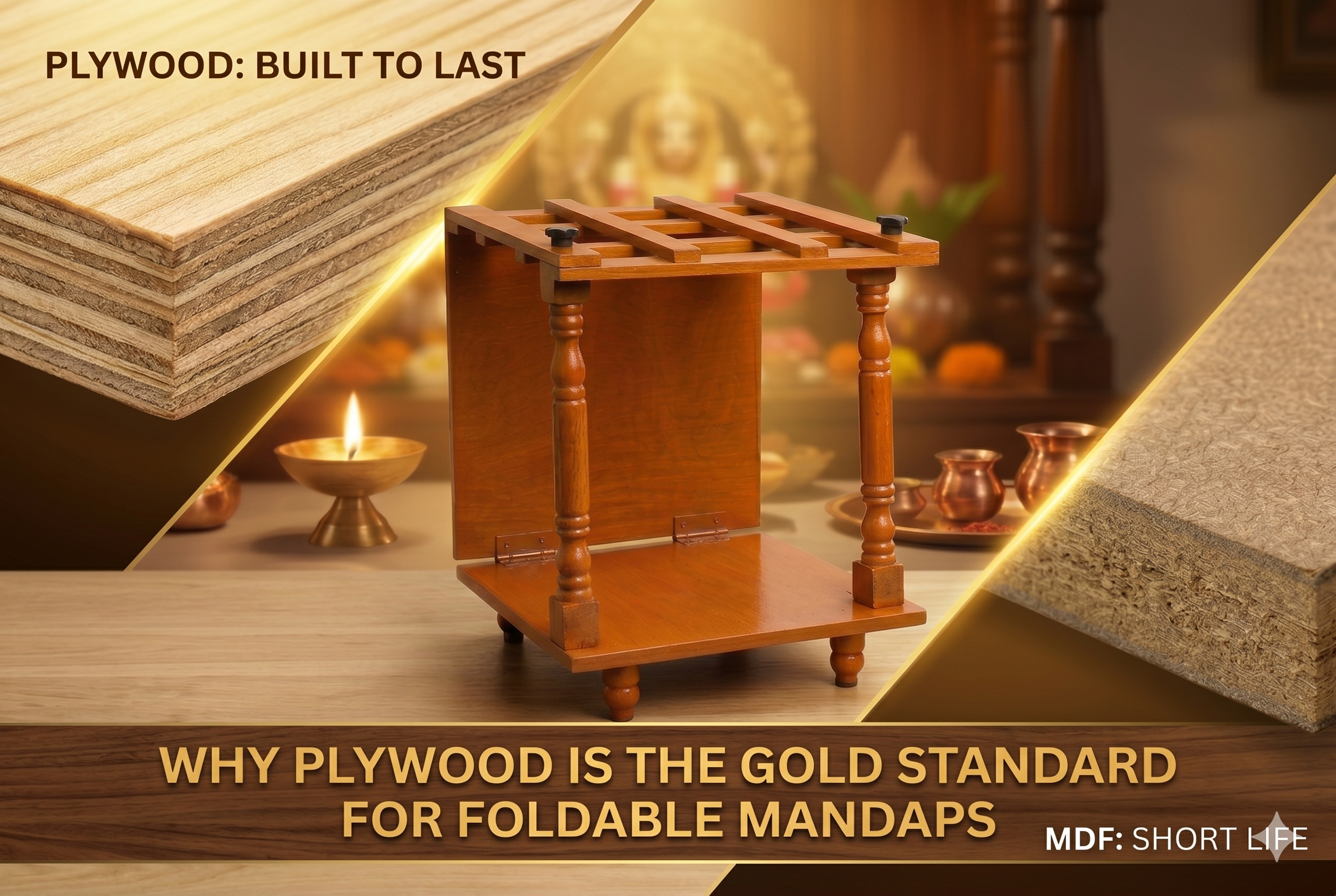
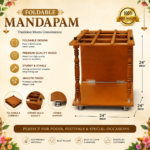
Investing in a mandap is more than just a furniture purchase; it’s about creating a lasting sanctuary for your home. In this post, we dive deep into the technical and practical reasons why we exclusively use high-grade Plywood instead of MDF. From hinge-holding strength to moisture resistance, learn why Plywood is the only material that guarantees your mandap remains a family heirloom for years to come.
Plywood vs. MDF
1. Structural Integrity & Weight-Bearing
A mandap often holds heavy brass idols, lamps, and offerings.
- Plywood: Created by layering thin sheets of wood veneer glued together in alternating directions. This “cross-graining” gives it incredible strength and prevents it from sagging under the weight of your deities.
- MDF: Made of compressed wood fibers and resin. It is essentially “engineered sawdust.” Over time, heavy items can cause MDF to bow or snap.
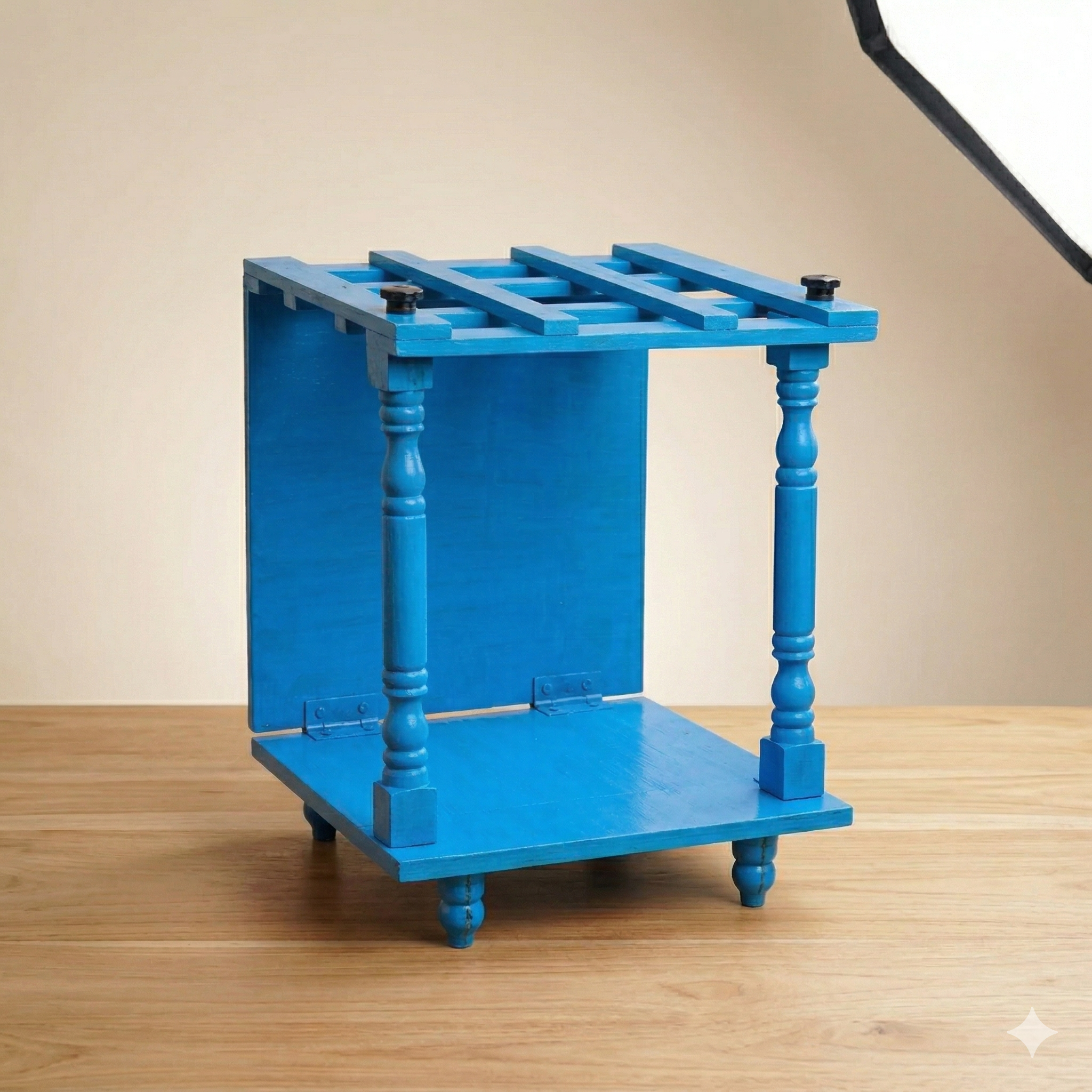
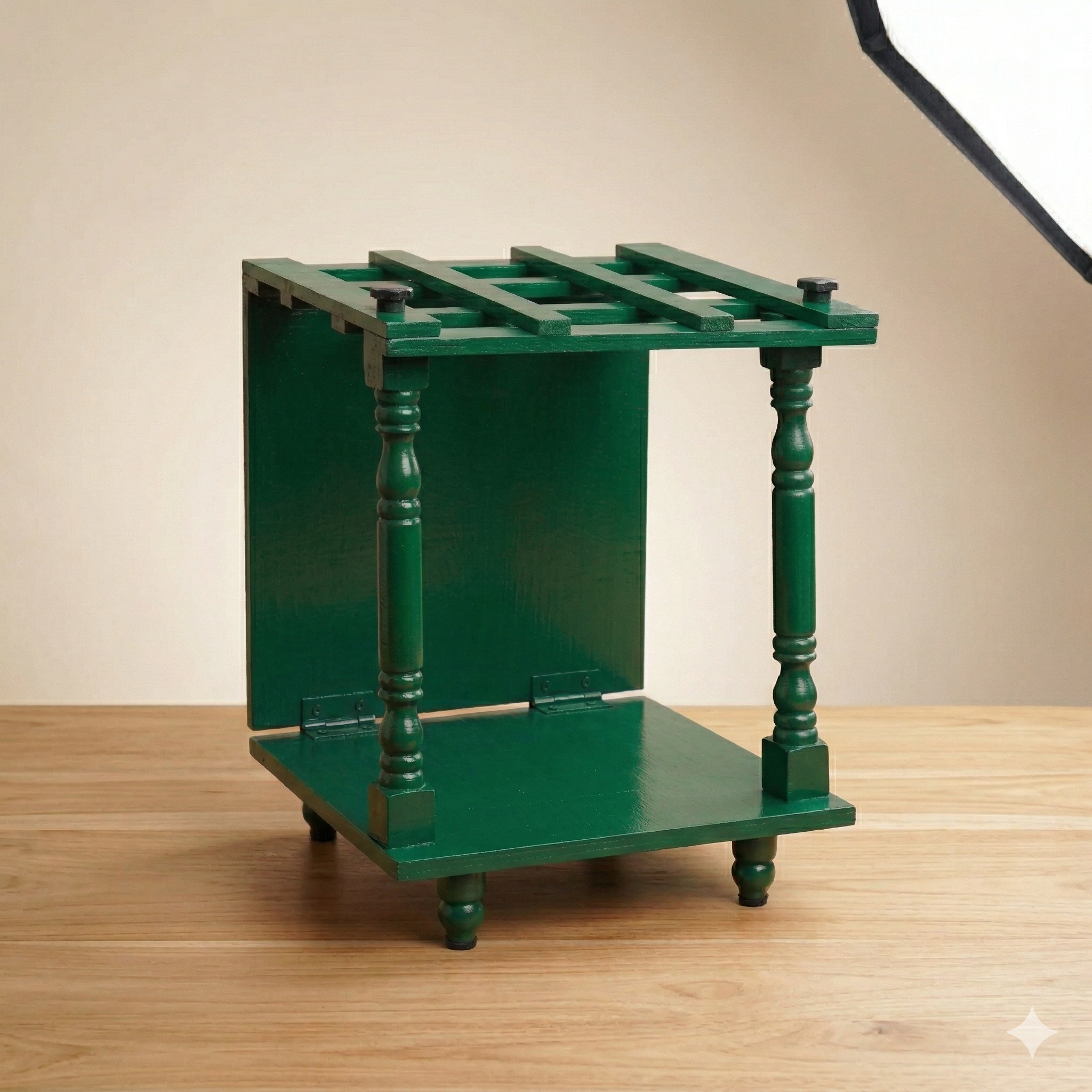
2. The “Foldable” Factor: Screw Holding Capacity
Because your mandap is foldable, the hinges are the most critical point of failure.
- Plywood: The solid layers provide a “grip” for screws. You can open and close the mandap thousands of times without the screws stripping the wood.
- MDF: Because it is a composite of fine particles, screws often lose their grip after repeated use. Once a screw hole is stripped in MDF, it is nearly impossible to repair permanently.
3. Durability and Longevity
- Plywood: Has a lifespan of 20–30 years or more. It behaves much like solid wood; it can be sanded down and refinished if it ever gets scratched.
- MDF: Typically lasts 3–5 years in high-use scenarios. Once the outer finish is chipped, the inner core begins to crumble and cannot be easily restored.
4. Moisture Resistance (Abhishekam & Cleaning)
In many traditions, water or milk (Abhishekam) is used during rituals.
- Plywood: Naturally more resistant to moisture. If a little water spills, the wood stays intact.
- MDF: Acts like a sponge. If moisture seeps into the edges, MDF will swell, warp, and eventually disintegrate.
Comparison Summary Table
| Feature | Plywood (Our Choice) | MDF (The Alternative) |
| Durability | High (Lasts decades) | Low (Prone to chipping) |
| Moisture Resistance | High | Very Poor (Swells with water) |
| Weight Capacity | Excellent | Moderate (Sags over time) |
| Repairability | Easy to sand/refinish | Difficult/Impossible |
| Hinge Strength | Superior grip | High risk of screws falling out |